


For any band to release a fourth album that comes anywhere close to an already outstanding back catalogue would be a challenge. Also, the record would need to be distinct, truly theirs, and say something powerful and original, which is a daunting task, not for Ezra Collective. With ‘Here because of hope,’ the London boys have created something with a message, profound depth and musical passion that, in my opinion, at least equals anything that they’ve done before.
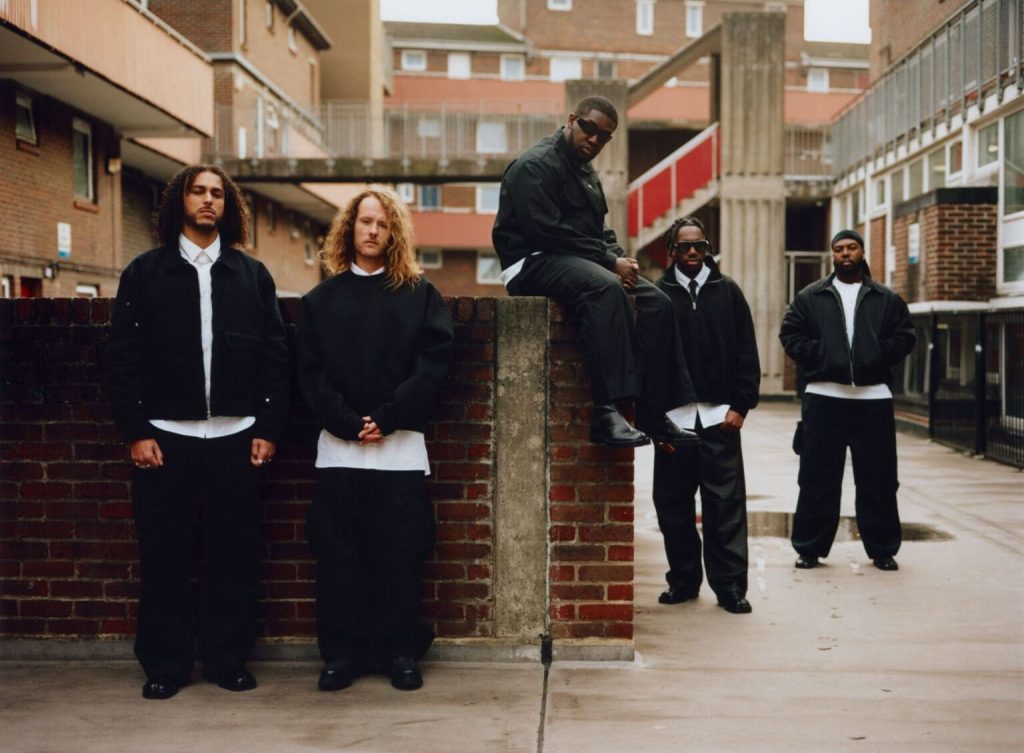
In a recent interview, Femi Koleoso (drums and de facto band leader) said that witnessing crowds dancing with pure joy to Fela Kuti’s ‘Unknown Soldier’ set him off thinking about how music borne out of deep sorrow and struggle could bring such euphoria. It’s a song about how Kuti’s own mother was killed in his Kalakuta Republic commune in Lagos by government forces in direct response to his landmark ‘Zombie’ record, which heavily criticised the Nigerian government and police brutality at the time. How could music from tragedy lead to such joy and happiness? Koleoso realised that the answer was hope, and Ezra’s fourth album, ‘Here because of hope,’ is a love letter to our inextinguishable human spirit.
The record, although wonderful musically, is also much greater than the sum of its parts, and a large contributing factor is the ideas that bind it all together. The album is divided into three sections, each one moving through the journey of hope with a foothold in a different part of the world. Part One begins in Africa, Part Two in the Caribbean, and Part Three in the UK. This journey reflects the movement of people and music over many years and for many reasons. Some were stolen against their will in utterly shameful periods of colonial slavery, while others actively decided to explore new places, find new horizons, and the possibility of change – always with the hope that something good must come, unpinning the next step.
There are several incredible collaborations with artists that build on that unifying concept and have all the more resonance in the parts in which their songs are found. Pa Salieu, Lile Iké, Leona Lewis and Libianca all add their own sublime touch to the music and to the picture of diversity and togetherness. Each part is also opened with a powerful and arresting piece of spoken word by the Guyanese-British actress Letitia Wright. It is easy to see why Wright was such a perfect choice for this part. As she was born in Guyana and moved to London as a girl, her upbringing mirrors the geographical movement of the record. In addition to that, like all of us to greater or lesser degrees, she has navigated her own mental health struggles, and to hear her affirming the vitally important need for hope gives the message all the more resonance and authenticity. Part One begins, ‘It is written that on the other side of this pain there will be a renewal, beauty for ashes…everything in my spirit knows this to be true. I feel it deep within my soul that my feet will land on solid ground…I feel strong.’ The more I listen to this, the more startling it is; such is the power of the words and her delivery of them.
This intro is followed by ‘Blow your trumpet’. Instead of the usual bombastic hit of energy that you might expect from Ezra Collective, this begins with Joe Armon-Jones tentatively feeling out notes on the piano in mid-tempo. It isn’t maudlin in any sense but instead reflects the cautious and self-protective first steps of hope after sorrow. There is even the occasional deliberate off-note to reflect the missteps that we all have when trying to change the course of our lives after experiencing something tough. The piano slowly builds with more confidence, then bass and drums join from the Koleoso brothers, with the horns of James Mollison and Ife Ogunjobi following to give a gentle contentment to the whole piece. What a joy; well, maybe we’re not at joy yet, we still need to steer through hope first, but we’re getting there.
Following this is the seductively more upbeat ‘Sweet Echo’, beginning with the instant hook of TJ Koleoso’s bass before the band join him for an absolute musical feast. There’s no wild dancing yet, but we’re happy, we’re swaying, nodding blissfully, and the sun has broken through the metaphorical clouds. Outstanding trumpet and organ on this one too; what a tune.
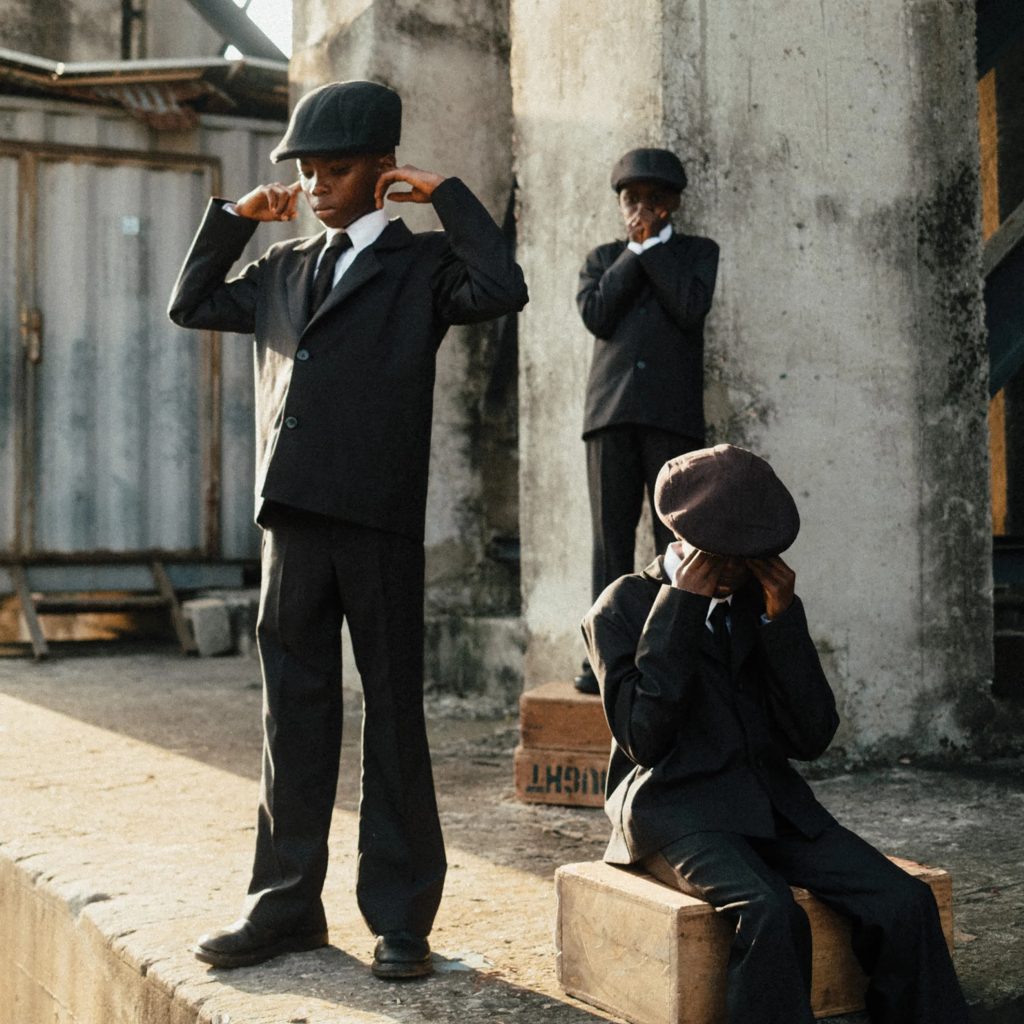
As you might be able to tell, I’m already stretching the word count, and I’m risking disappearing up my own anus with gushing hyperbole, but I bloody love this record. There is so much in it to enjoy and to consider. Musically, the album is exceptional, but conceptually and cohesively it really takes my breath away as a real wonder. I’ve heard Femi Koleoso talk passionately of the wide-ranging musical inspirations that span the length and breadth of Africa reflected in Part One alone. It would have been so easy to lean into a West African happy place, but they chose instead to make each part truly reflect the diversity of the intended origin. This record has a lot of good going on. Tracks such as ‘El Corazón’ with its infectious Caribbean swing, the instant classic that is ‘Jubilee Feeling’, ‘Black Flag’, the beautiful ‘Well Organised’…there are many more; just listen for yourself.
A parting thought to leave you with is about the final tune, the graceful ‘Most High’ featuring Libianca. The first time I heard it finish, I’ve got to be honest, I was expecting more – another track to follow to round it all off; the end just felt too abrupt. But then hope isn’t the end; there is more to follow, joy and celebration come next. Hope bridges a journey that starts in sorrow, and it isn’t the end of the story. Perhaps that is what Ezra Collective meant with the end? I can’t imagine for a moment it was because they’d run out of ideas; they’re simply too good for that.


