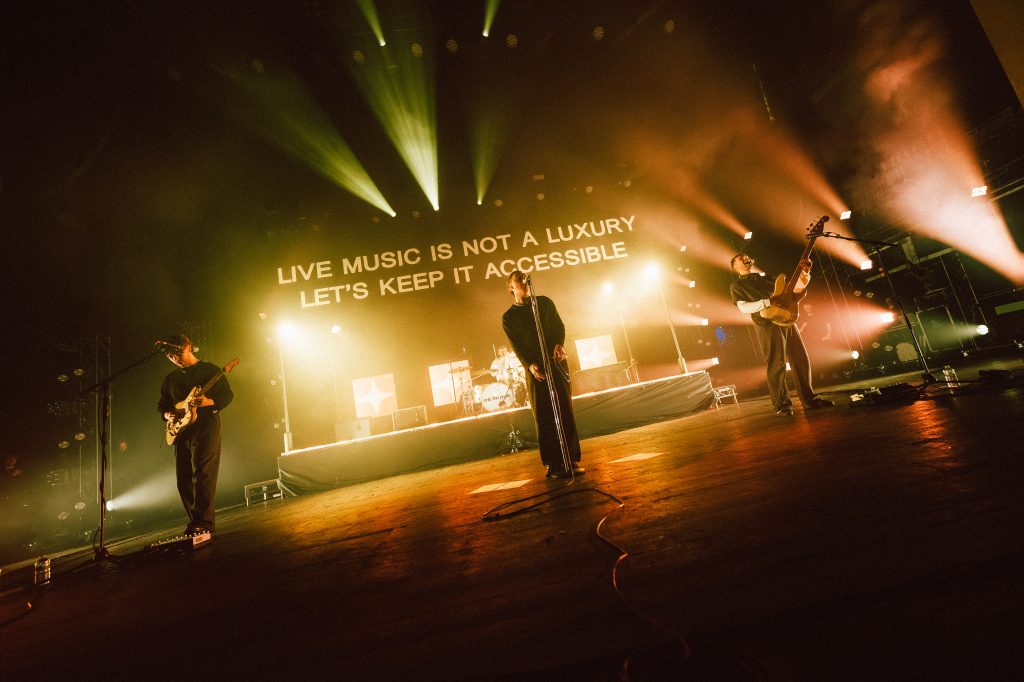
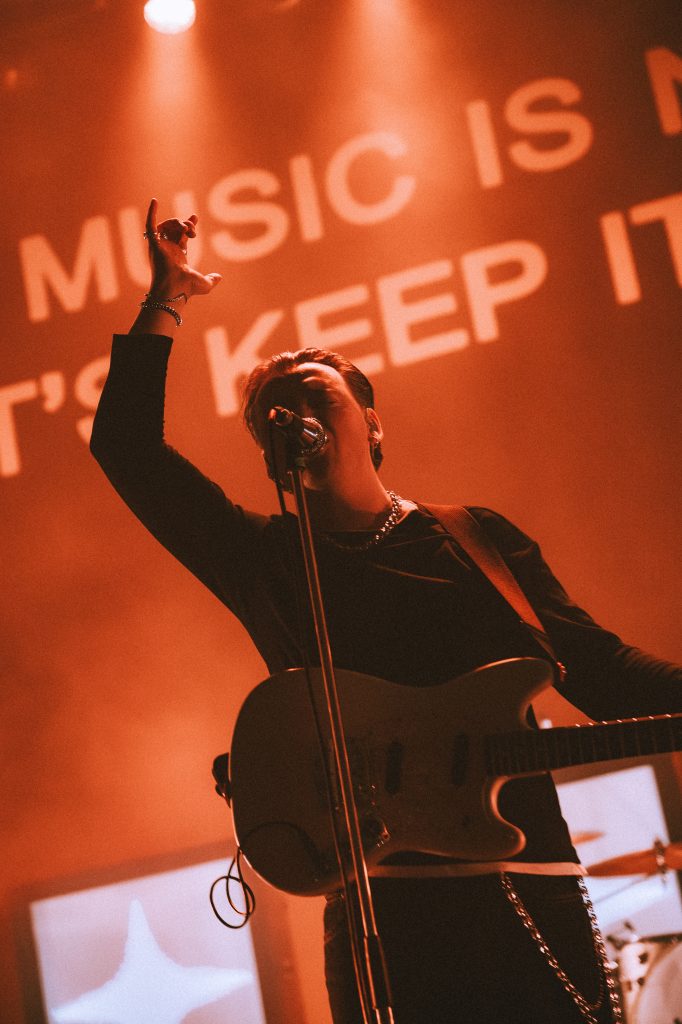
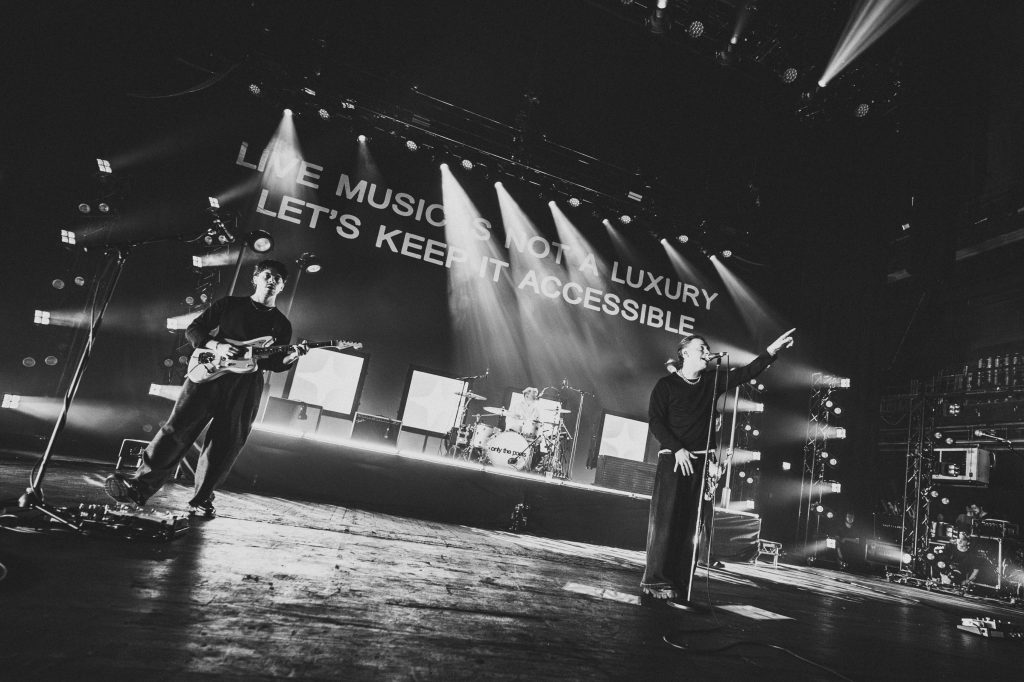
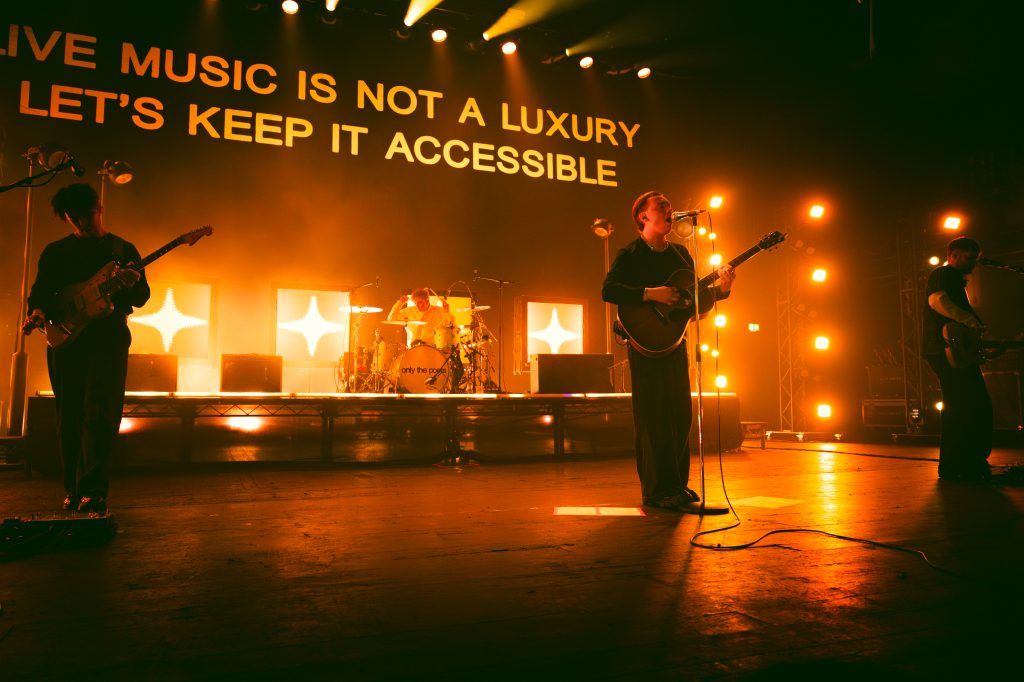
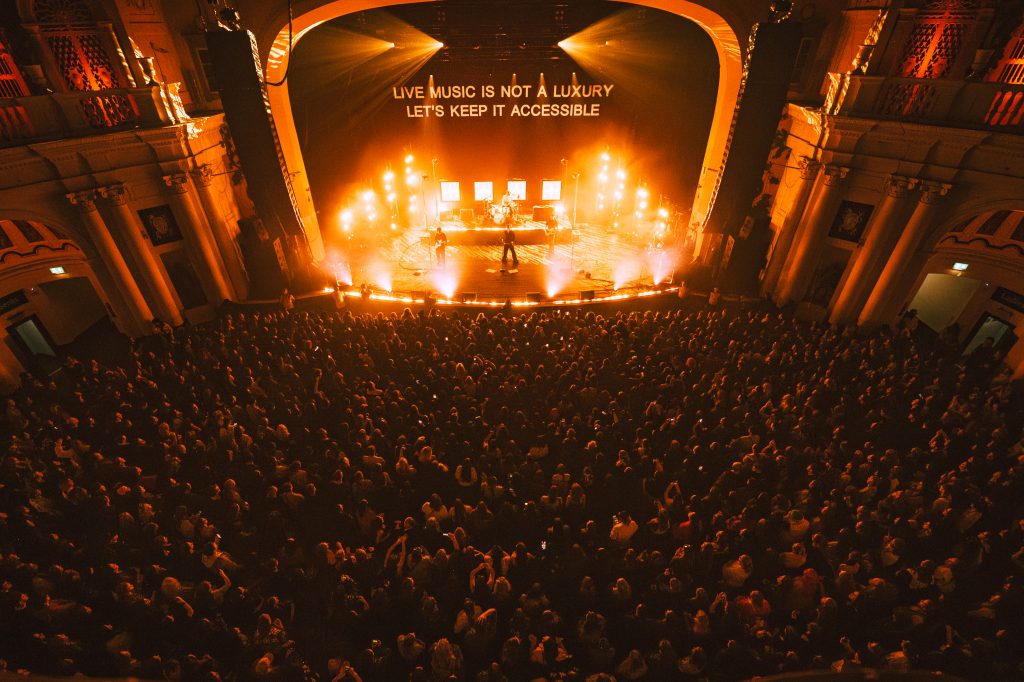
“LIVE MUSIC IS NOT A LUXURY. LET’S KEEP IT ACCESSIBLE.”
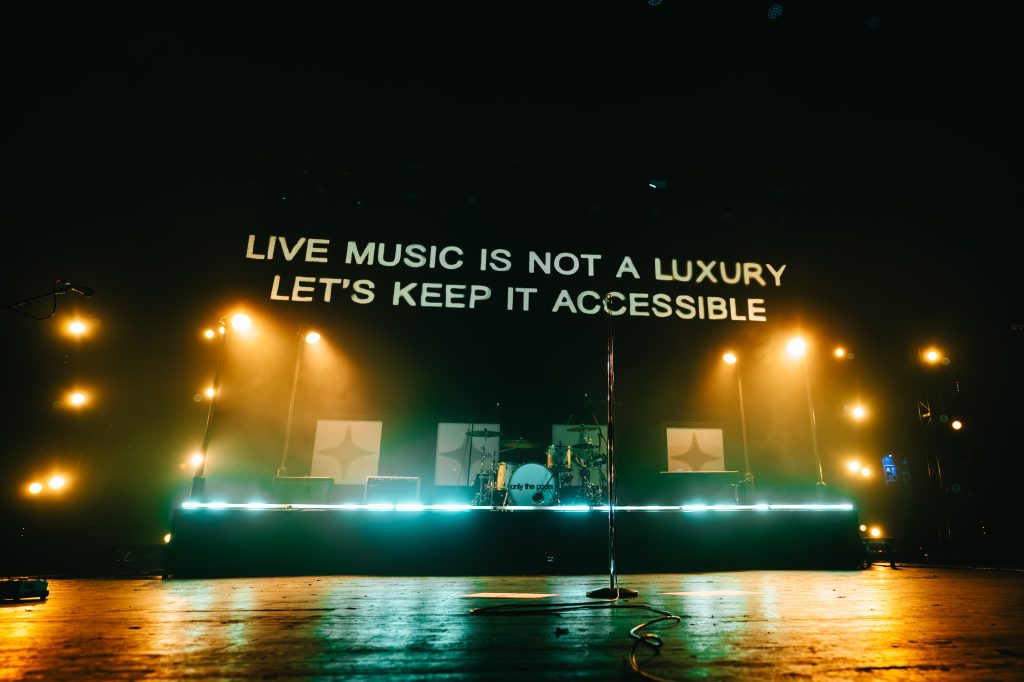
Emblazoned across the back of the O2 Brixton Academy stage, this message landed with the force of a manifesto. In an industry increasingly defined by jaw-dropping ticket prices, hostile on-sales, and the slow erosion of grassroots spaces, Only The Poets’ biggest headline show to date doubled as something far more pointed than a victory lap. To celebrate the release of their debut album, And I’d Do It Again – which debuted at #9 on the UK Charts – the Reading quartet sold out Brixton’s 5,000-capacity room for just £1 a ticket. Not a gimmick, but a very loud statement.
With additional service fees directed towards Live Music Trust, an initiative that supports grassroots venues across the UK, two unsigned support acts selected via a ‘Battle of the Bands’ held just days earlier in Reading (read our review of the day here), and a clear refusal to treat scale as an excuse for detachment, the band transformed a milestone night into a live case study of what accessibility could look like if artists chose to prioritise it. This choice felt sincere, urgent, and deeply rooted in the band’s own history.
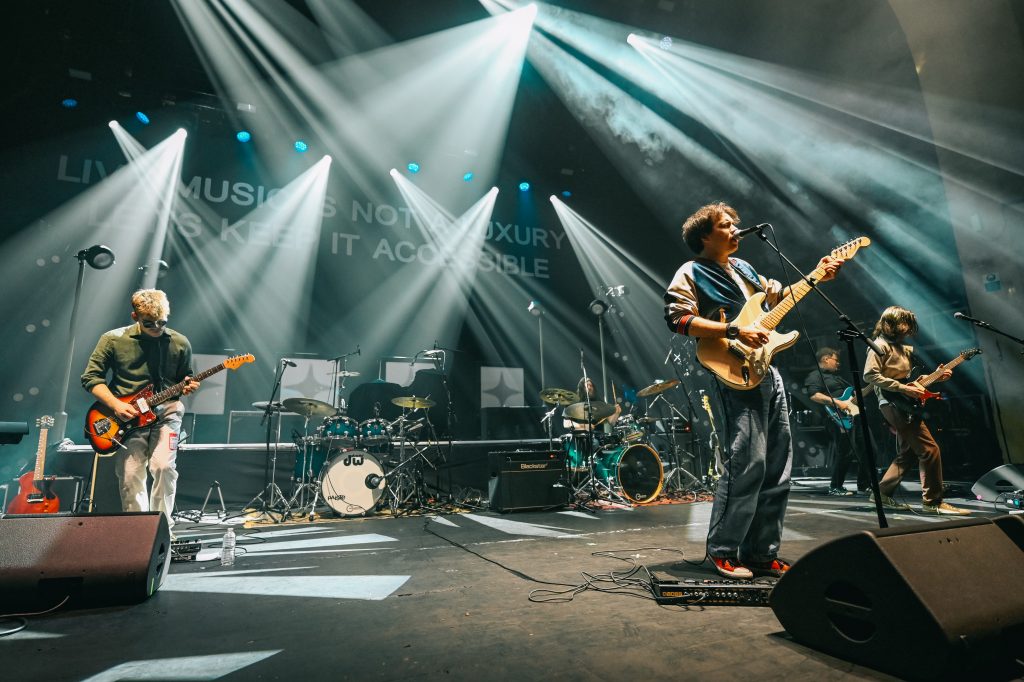
That history was honoured from the outset. Bristol’s Belle Dame opened the night with a set that immediately justified their place on such a stage. Tight, agile musicianship anchored a sound that sat comfortably between bouncy 2000s indie and funk-leaning groove, and frontman Edd Moreira’s charisma – at one point even playing guitar behind his head – won over the room with ease. Tennessee felt tailor-made for hot summer festival nights, while Mary Sue erupted into a wordless call-and-response that had Brixton clapping in unison. For a band formed in 2021, Belle Dame already possesses a striking sense of identity: melodic, rhythmic, and built to thrive under lights.
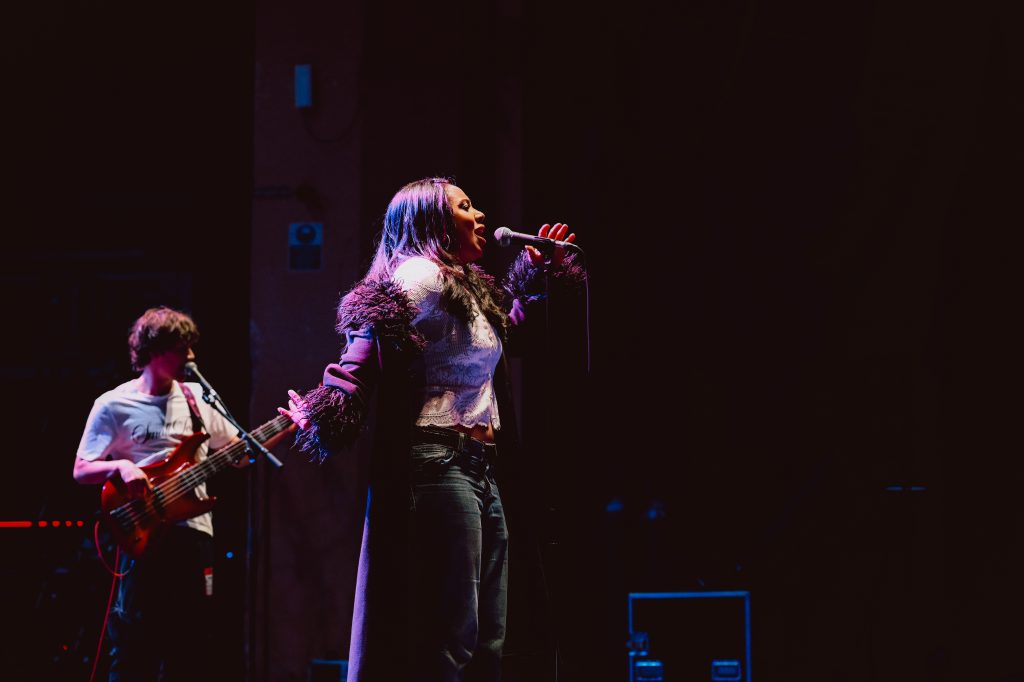
SEREN followed with a marked tonal shift. Backed by a full band, her usually stripped-back songs expanded without losing their emotional core. Tracks like River and Maybe, I Don’t Know unpack the ache of leaving home and returning changed, describing supermarket run-ins with old classmates or walking down streets you know by heart and realising you’ve outgrown them, all delivered with a vocal maturity well beyond her years. Her storytelling felt intimate but universal, offering a reminder that accessibility isn’t just about ticket prices, but about who gets to be heard on stages like this.
With the room energised and ready, Only The Poets emerged to the warped cinematic swell of And I’d Do It Again, the instrumental title track from their debut album. It rose and fell like a half-remembered scene, tension building as four illuminated stars flickered behind the band and the chants of “O-T-P” rolled down from the balcony and back of the room. When the opening piano chords of I Keep On Messing It Up hit, Brixton erupted.
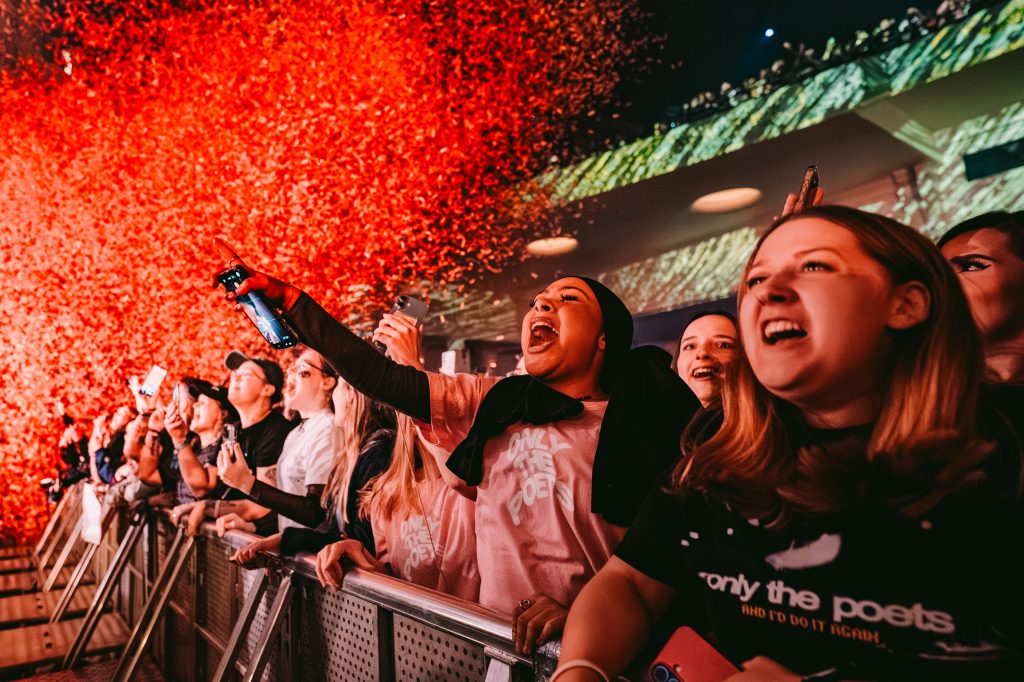
Choosing this track as an opener was incredibly smart. On record, it’s a bright, 80s-tinted pop song that disguises self-reproach inside irresistibly buoyant production. On stage, accompanied by a blast of red confetti, this duality set the tone for the remainder of the show, refusing to separate catharsis from confrontation. Frontman Tommy Longhurst bounded across the stage, encouraging the room to jump, while drummer Marcus Yates and bassist Andy Burge locked into a groove that never once wavered for the next 90 minutes.
Over & Over followed, greeted like an old friend. A song steeped in shared memory of late-night drives, long queues, and friendships formed around a band, it transformed the room into circles of people facing each other rather than the stage. Hands shot into the air on cue, devotion thick in the air.
New material from And I’d Do It Again sat seamlessly alongside older favourites. God Knows Where You Were expanded into something monumental live, Longhurst switching to acoustic guitar as the crowd turned its syncopated chorus into a communal chant. Clem Cherry’s guitar solo teased out the song’s joy before the final pre-chorus stripped everything back, Longhurst’s vocal climbing with striking control: “Counting all my lucky stars / Now I found you”. It already feels like a future staple of their live set.
Framed as a “time capsule” of the band’s twenties, of romantic endings, mental health spirals and small-town nostalgia, the album formed the spine of a set carefully calibrated to ebb and peak. Don’t Wanna Know and Emotionally Hungover introduced a more introspective mid-section, the latter preceded by Longhurst addressing the room: “Obviously tonight is about our debut album coming out and playing our dream venue, but it’s also to start a conversation that is so much bigger than us, and that is accessibility in live music.” The response was raucous. When the first chorus of Emotionally Hungover hit, it was screamed back with an intensity that turned emotional burnout into collective release.
Bad marked one of the night’s most thrilling pivots. Bathed in red light, the band stretched its sultry studio version into a ferocious live arrangement, repeatedly faking the ending before crashing back heavier each time. It was the clearest sign yet that Only The Poets are no longer just a beloved indie-pop band, but are now very convincingly festival and arena headliners in waiting.
Nostalgia threaded through the middle of the set. Every Song I Ever Wrote, the track that marked a turning point in the band’s career after a crucial support slot with Louis Tomlinson in 2022, carried a different weight in a 5,000-capacity room. For long-time followers, it was impossible not to flash back to the tiny venues and uncertain tweets and livestreams about the band’s possible end due to the pandemic that preceded this moment. Longhurst framed the song as a thank you to everyone who carried them here, and you could see the band needing a moment to take in the view as the chorus swelled: a full-circle moment sung at full volume.
Lead single Monumental landed with the confidence of a future classic. Despite only being released the previous Friday, it was already belted back word-for-word, its refrain of self-realisation – “losing me was monumental” – sounding like a collective reclaiming of self-worth. You Hate That I’m In Love raised the stakes again, with its push-and-pull dynamics and emotionally messy narrative in pristine pop architecture of towering hooks, proving why it’s arguably the album’s strongest single. In the bridge, with the band dropping down to just drums and claps, Brixton felt briefly twice its size.
For all the confetti and encouraged dancing, some of the night’s most effective moments were the quietest. Thinking Bout Your Ex glided in on woozy, late-night R&B textures, with its lyrics unpacking jealousy and insecurity from a male perspective with disarming frankness. Then came Madeline, the set’s emotional core. With the band seated behind him and thousands of phone torches flickering like stars, Longhurst’s voice sat almost uncomfortably fragile and exposed. The song’s refusal to offer easy closure deepened the hush; for a few minutes, the dancing ceased, and Brixton simply listened.
Any risk of the set dragging was quickly neutralised. Crash ripped the set back into motion, unleashing the band’s heaviest arrangement amidst strobing lights, distorted guitars and heavy cymbals. Freeze continued this trajectory, Burge’s bass and Yates’ drums driving the track while Cherry delivered the night’s standout guitar moments. Then came Saké, an unexpected high point. On record, its sleek, commercial gloss and simple lyrics could invite accusations of genericism; live, however, it functioned as one of the most energetically received songs of the night. Its neon-lit groove, Burge’s swaggering bassline and an almost shamelessly catchy chorus turned both the floor and balcony into a bouncing mess. This is the kind of song that, in lesser hands, might feel like disposable radio fodder; here, however, it became a joyous victory lap.
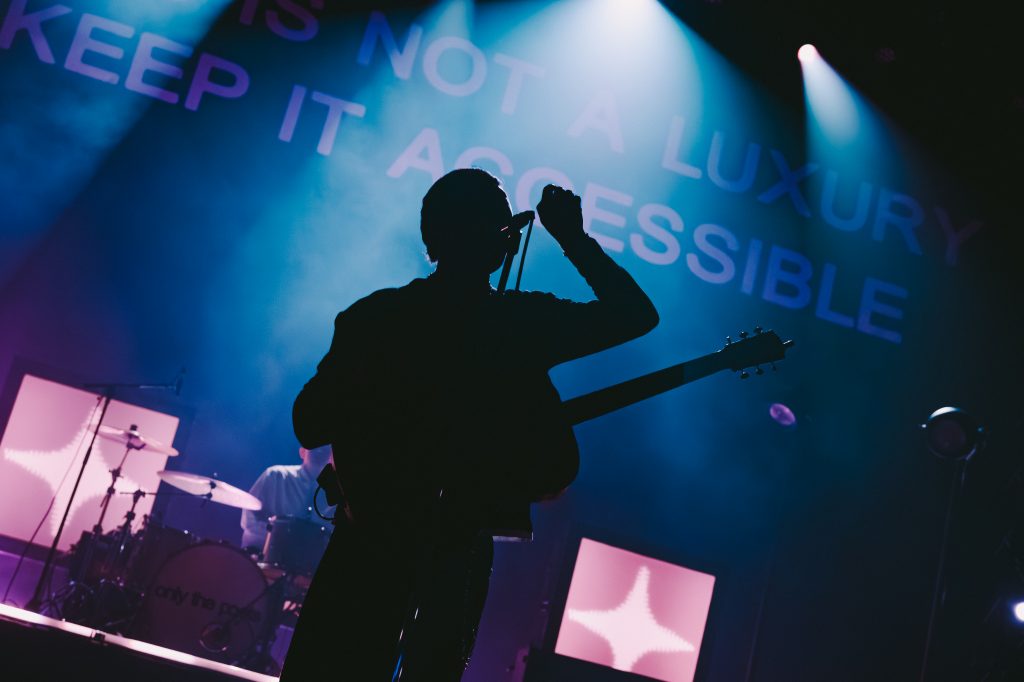
Before launching into Gone By Now, Longhurst shared that their debut album was sitting in the UK Top 10 mid-week charts, thanking the crowd for believing in the band that once worried whether they would even continue. The resulting minute-long standing ovation seemingly caught him off guard. During the bridge – “It’s so unfair / You keep me here” – it seemed that the volume in the room couldn’t get louder, but it did, a sea of arms waving in unison as the song’s depiction of unresolved heartache collided with the very real elation of the moment and importance of nights such as this – affordable, accessible, and communal.
Guess She’s Cool arrived as a necessary exhale. Circling rebound relationships and emotional denial, its tenderness worked as a comedown without draining momentum. That ascent resumed with All This Time, one of the night’s strongest performances and a showcase of Longhurst’s vocal growth and maturity. A subtle key change lifted the final chorus into something expansive, the song unfolding as if it had always been written for rooms like Brixton.
One More Night closed the main set with the clearest statement of the band’s thesis: escapism in specific, lived-in detail. Written as a kind of love letter to the nights and people that shaped them, the song already sounded like a stadium anthem when it was shared as a demo in a tiny Reading pub in 2023; scaled to 5,000 voices, it was enough to give goosebumps. From the first verse, it felt like watching the band step into the spaces their music has been pointing at for years: huge, nostalgic, aching for a version of yourself you only recognise once it’s gone. Strikingly few phones were in sight, as most fans simply screamed the words and clung to their friends as the bridge dropped to just the crowd singing. It felt like the entire room was momentarily rewinding their own lives to versions of themselves who would have given anything for “one more night like that.”
Returning on stage to thunderous cheers, the encore distilled the band’s ethos into two final punches. JUMP! arrived in a shower of gold confetti, reckless and inclusive in equal measure, before Emotional closed the night on a triumphant note. Led by the two girls who started the now-traditional “emotional moshpit”, the celebratory finale was as chaotic as it was joyful. Before the final chorus, Longhurst paused, looking out across the room he once stood in as a fan himself, and thanked the crowd for changing their lives.
Leaving Brixton for the frigid February air, ears ringing and shoes sticky with confetti, it was hard not to feel exactly what the album describes so well: emotionally hungover, yet high from the connection and the arguably strange, necessary ritual of throwing yourself around a room full of strangers to feel less alone. This show went beyond the textbook album release show; it was a love letter to grassroots music, a protest against the idea of live music only being accessible to those who can afford it, a championing of unsigned artists, and a glimpse into a future where bands like Only The Poets can fill arenas without losing sight of the fans who got them there.
If this night were a time capsule, years from now it will still tell the same story: for £1, a band and their community rewrote the rules for what live music can, and perhaps must, be. Judging by the night itself, they’d do it again in a heartbeat.