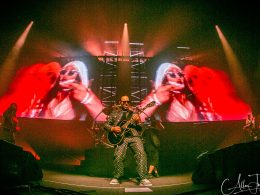
Trying to summarise a Gorillaz show feels impossible. It’s never just a gig, it’s a collision of worlds. Animation meets reality, nostalgia meets constant reinvention, and at the centre of it all is Damon Albarn, orchestrating chaos with a grin that never leaves his face.
The set opened with The Mountain, a track deeply rooted in Indian influence, both musically and spiritually. Rather than launching straight into high energy, it unfolded slowly – delicate instrumentation, layered textures and a sense of calm that gradually built into something more expansive. It allowed the suspense to bubble, drawing the crowd in gently before the night began to gather pace. From there, the set moved fluidly between eras, with newer material sitting comfortably alongside the classics, each met with equal enthusiasm from the Liverpool crowd.
What sets a Gorillaz show apart is its constant movement – not just musically, but visually and physically. The production is a spectacle in itself, with Jamie Hewlett’s iconic animated world lighting up the screens throughout. The first glimpses of the band’s cartoon counterparts sparked immediate roars, while tracks like Delirium leaned into full, acid-trip visuals that pulled the audience deeper into the experience.
But for all the scale, it’s the human moments that hit hardest. Albarn repeatedly moved to the barricade, interacting with fans, signing vinyl mid-song, beaming as he did. There’s something so genuine about it – no ego, just someone who clearly still loves what they do, and who they’re doing it for.
Musically, the night was relentless in the best way. Crowd favourites like Dirty Harry, Kids With Guns and Feel Good Inc’ landed exactly as expected – huge, explosive, impossible not to move to – but they never overshadowed the rest of the set. Instead, they felt woven into a wider journey, one that moved between high energy and quieter, more reflective moments.


The Shadowy Light provided one of those pauses. Phones lit up the arena, torches raised and for a few minutes the chaos softened into something more vulnerable. It’s in these moments that the scale of Gorillaz strips back, revealing the emotional core underneath it all.
The list of collaborators on stage only reinforced what Gorillaz has always been about: community and collaboration. Yasiin Bey brought undeniable presence to Stylo and Damascus, while Bootie Brown and Michelle Ndegwa injected fresh energy into Dirty Harry and Kids With Guns. Argentinian rapper, Trueno, who opened the night, returned with explosive confidence for The Manifesto, proving exactly why he earned that slot.
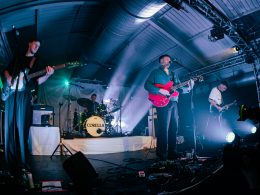
Behind it all, the band were just as captivating. Guitarist Jeff Wootton and bassist Seye Adelekan brought endless energy, but it was their presence that truly stood out – the movement, the smiles, the pure joy of performing. It was magnetic. At times, it was impossible to look anywhere else. Watching them have the time of their lives was completely infectious, a reminder that live music at its best is just as much about what’s happening on stage as it is how it makes you feel in the crowd.
And then, just as it felt like things might be winding down, Albarn teased the end: “that’s probably enough for a Sunday night…” – met instantly with a sea of boos. Smiling, he conceded: “well if you feel that strongly about it…” before launching into Clint Eastwood. It was the perfect reminder of the relationship between artist and audience – playful, responsive, filled with admiration each way.
Clint Eastwood is the track that started it all. Gorillaz debut, launched in March 2001. Hearing it live took me straight back to discovering it on Now That’s What I Call Music! 48, a full-circle moment that only added to the weight of the finale. Not just a hit, but a cultural marker – and still just as powerful 25 years later.
Because that’s what a Gorillaz show really is. Not just a performance, but a constantly evolving world. One that spans generations, genres and identities – and somehow still feels as exciting and relevant as ever.